
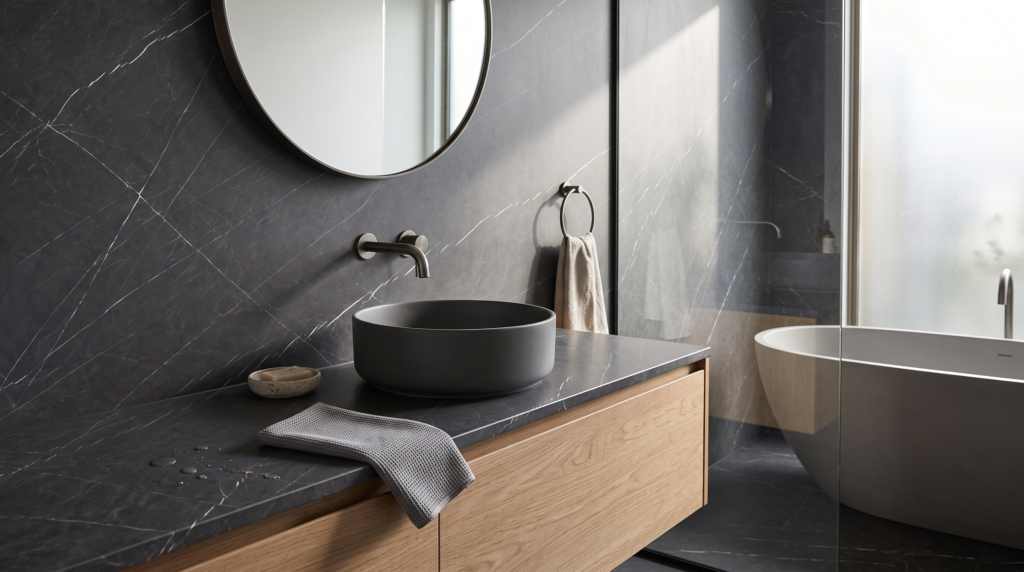
A marble bathroom is stunning. The veining, the textures, that designer hotel feel that makes you want to move in immediately.
Then reality kicks in: water splashes, soap residue, limescale and that bottle of limescale remover that promises miracles. But before you spray it everywhere, there’s something you should know: when it comes to marble, some everyday cleaning products can do even more damage than limescale itself.
Does this mean marble in the bathroom is a terrible idea? Not at all. It simply means you should know what you’re choosing. Let’s find out why.
Marble in the Bathroom: Yes, But Choose Wisely.
Let’s start with some good news: marble can be used in bathrooms, including shower areas, provided the stone is suitable for the application and the installation is properly planned.
It can take centre stage on a vanity top, cover a wall or create a seamless look between floors and vertical surfaces. And you don’t necessarily need to cover everything: sometimes, a single well-chosen slab is enough to completely transform a space.
The less romantic side? Not all marbles are the same, and different applications call for different properties. Porosity, finish, exposure to water and proper waterproofing are all factors to consider before installation.
In short, choosing a slab simply because it looks amazing on Pinterest is a great start. But it shouldn’t be the only deciding factor.
The Real Enemy Isn’t Water. It’s What You Spray on It.
Marble can handle water, but it is sensitive to acidic substances. And here’s the surprise: some products we use regularly in the bathroom can damage it.
Vinegar, lemon juice and many acidic limescale removers can dull or etch the surface. It’s not necessarily a stain that will disappear with another wipe: the finish itself may have been damaged.
Cosmetics, oils and soap residue also deserve attention, as some types of stone can absorb them or become stained.
How can you avoid a little domestic disaster?
- Use pH-neutral cleaners suitable for natural stone.
- Dry surfaces that are frequently exposed to splashes, especially in the shower.
- Wipe away any residue from cosmetics and body care products promptly.
- Avoid homemade cleaning solutions containing vinegar or lemon juice.
- Ask whether your chosen stone requires a protective treatment.
A protective treatment can help reduce absorption, but it won’t make marble invincible. Unfortunately, we haven’t found a finish that can do that just yet.
Polished or Honed? A Matter of Taste. And Design.
A polished finish catches the light, enhances the veining and gives the surface a glossy appearance. It’s a striking choice, especially for walls and vanity tops.
A honed finish, on the other hand, has a more understated, contemporary look. Less reflection, more texture: perfect when you want the stone to speak for itself without too many special effects.
Then there are textured finishes, which highlight the more natural character of the stone.
One important note, though: if you’re choosing marble for a shower floor, looks aren’t everything. You also need to consider slip resistance under the intended conditions of use. A matte finish isn’t automatically slip-resistant, just as a polished finish isn’t necessarily impractical.
How to Pair Marble Without Turning Your Bathroom into a Hotel Suite?
You don’t need to fill your bathroom with gold taps, backlit mirrors and glossy surfaces to achieve an elegant look.
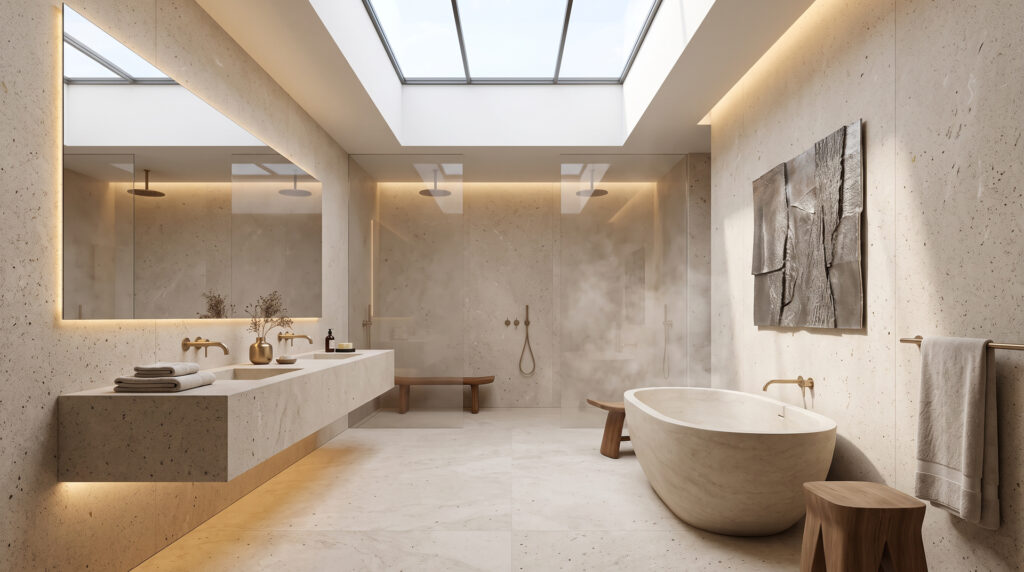
Light marble paired with natural wood creates a warm, bright atmosphere. Dark stone can take centre stage alongside minimalist furnishings and satin-finish metals. More dramatic veining works best when it has room to shine, without having to compete with ten other elements.
The rule is simple: if you choose a statement stone, let it do the talking.
And no, you don’t have to pair every marble with gold. Satin-finish steel, wood and neutral tones have an interesting social life of their own, too.
So, Is Marble in the Bathroom Worth It?
If you love natural materials, one-of-a-kind veining and surfaces that add character to a space, absolutely. As long as you choose the right stone for the application and understand the care it requires.
If, on the other hand, you want a surface you can completely forget about once it’s installed, without ever giving it another thought, it may be worth considering other options.
The right choice isn’t the one that looks best in a photograph. It’s the one that works for your project and the way you live in your home.
Marble doesn’t have to be perfect to be beautiful. But knowing how to care for it certainly helps.
Frequently Asked Questions.
Yes, provided you choose a suitable stone and finish, and ensure proper waterproofing and installation.
It can happen. It depends on the stone, its porosity, the finish and the substance it comes into contact with. It’s best to wipe away residue promptly and consider applying a protective treatment if needed.
Use pH-neutral products suitable for natural stone and a soft cloth. Avoid vinegar, lemon juice and acidic limescale removers.
A polished finish enhances shine, while a honed finish offers a more understated look. For floors, especially in wet areas, slip resistance is also essential to consider.
It requires a little more care than some other surfaces. That doesn’t mean you have to clean it with a tiny brush every night, but you can’t treat it like just any tile, either.
In Conclusion.
Marble in the bathroom can be a beautiful choice, as long as you start by asking the right questions: which stone, which finish and how will it be used?
Because good design is also about choosing a material you love today that makes sense for everyday life.